
A balanced meal, how much should I eat to lose weight?
Hello, welcome back to the blog. It is the third week of the 2024 weight loss challenge, we hope the information we have provided so far is helping you shape your weight loss journey and we hope that you are starting to realize the value of your efforts, “there’s no reward without work, no victory without effort, no battle won without risk“-Nora Roberts. If you are new to the blog, you can visit our dedicated weight loss challenge page to get up to speed with the tasks we have done in the past two weeks, fitness and health is still within your grasp in 2024.
Today is the day that you track your third week’s progress as recommended in step 4 of our weight loss challenge guide. By now you should be aware of some of the food that needs to go from your plate as well as food that needs to be included or increased. We hope you are winning with reducing the not-so-healthy foods whilst increasing the nutritious foods, we also hope that you have started to move a little bit more if you were previously sedentary and have increased your activity levels, we cant emphasize enough the benefits of movement on your physical, mental and emotional wellbeing (please do not rob yourself off this natural incentive 🙂 ).
This week we focus on forming a balanced meal. A balanced meal will ensure that you get varied and sufficient nutrients for optimal functioning of your body as well as helping with weight management. To us (Kat & Tshepi), forming a balanced meal is one of the good ways to address the question of how much one needs to eat to lose weight. Other ways to answer this question are: (1) Using our own intuition by simply being aware of our own bodies, knowing and stopping when we are full, or (2) by being a bit technical and using a calorie calculator to determine the amount of food to consume daily to reach your weight loss goal.
Although there are various ways to determine the correct amount of food to eat in order to lose weight, we focus and recommend starting with learning to create a balanced meal, this will build a solid foundation for proper nutrition and for creating your own healthy and enjoyable diet and menus. Remember the best diet in the world is the one you create for yourself, a diet that includes the foods that you choose and enjoy. This is the diet that will bring long lasting weight loss results.
To form a balanced meal we need to ensure that the basic components of our human diet are covered on our plates, these components are the three essential macronutrients which are Carbohydrates, Proteins and Fats , they are our bodies’ essential sources of energy. Alcohol is considered a fourth macronutrient due to its caloric content but it is not essential for survival and adds no value to weight loss efforts.
Carbohydrates includes foods such as fruits, leafy and starchy vegetables, rice, breads and pasta. Proteins includes foods such as meats and fish, eggs, beans and lentils, cheese, yoghurt, nuts and almonds. Fats includes foods such as dairy products, avocados, meats, egg yolks, olive oil and seeds. A particular distribution of these foods on your plate will form a balanced meal, here is a guide:
- Half (1/2) of a plate should be fruits and vegetables.
- Quarter (1/4) of a plate should be starchy carbs (Pap, rice, pasta, potatoes, bread, ,squash, peas, Couscous).
- Quarter(1/4) of a plate should be proteins(fish, chicken, turkey, pork, eggs, beans, lentils, cottage cheese).
- Fats will be included in most of the protein foods or you can add a tablespoon of olive oil or butter.
The following image provides further tips and guidance on forming a balanced plate.
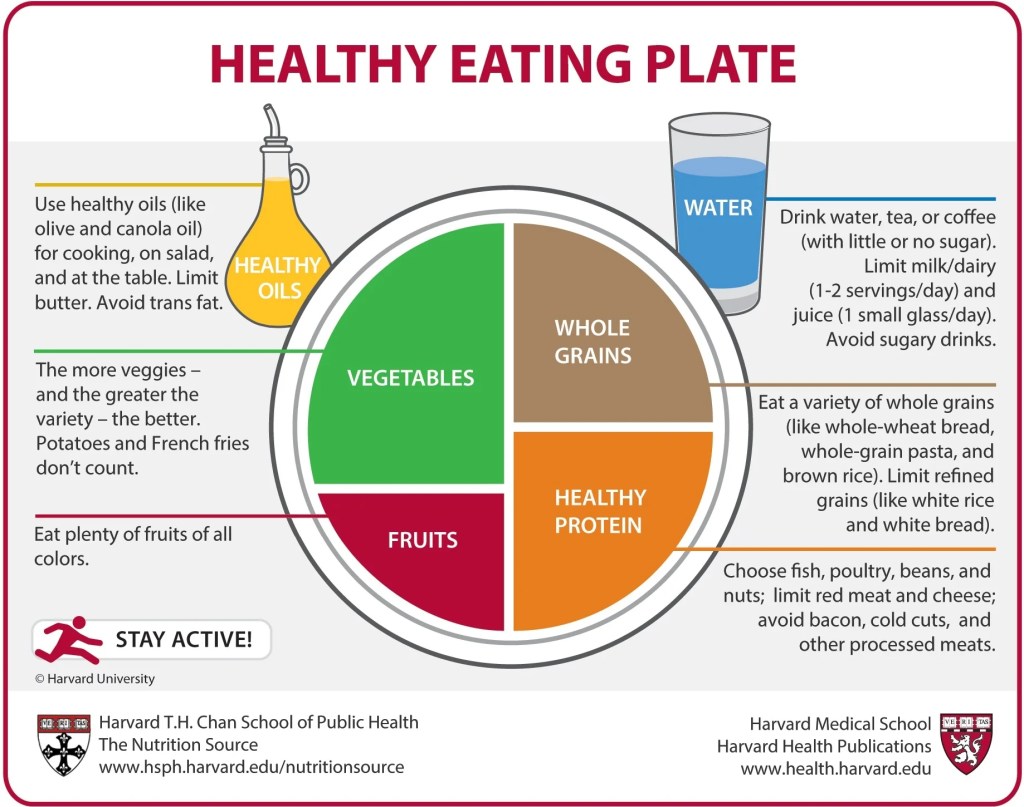
The distribution of the macronutrients on your plate will help you to consume sufficient nutrients and reach a level of satiety easily. In forming a balanced meal, you will be avoiding overeating certain macros than others which affects your energy levels, fat burning/storage and feeling full. A typical example would be overeating simple carbohydrates(white rice, crisps, biscuits, white breads, sodas) rarely makes you full, spikes your blood sugar levels, prompt the release of insulin which can promote fat storage. But eating a balanced combination of whole foods such as vegetables, brown rice, chicken or fish and an apple will get you full easily.
The task for last week(Wk2) was to create an awareness of whole foods vs processed foods on your plate, we hope it was a good exercise with beneficial findings . For this week, we would like you to attempt forming balanced meals of your own. Using the tips and guide on this post, create balanced meal plates for your lunch and dinner throughout the week. Your meal should includes mostly whole foods and less processed foods(we try to keep ours to less than 25%).
In attempting to keep our meals balanced , our (Kat & Tshepi) lunch and dinner typically consists of roasted vegetables(Broccoli, cauliflower, carrots, green beans, baby marrows, pumpkin, patty pan squash), Beetroot , gem squash, spinach. Chicken breast/Pork chop and watermelon for a fruit. We have provided an example of our typical lunch below, we hope our attempt will inspire some freedom and creativity on your part to create healthy balanced meals of your liking and enjoyment.
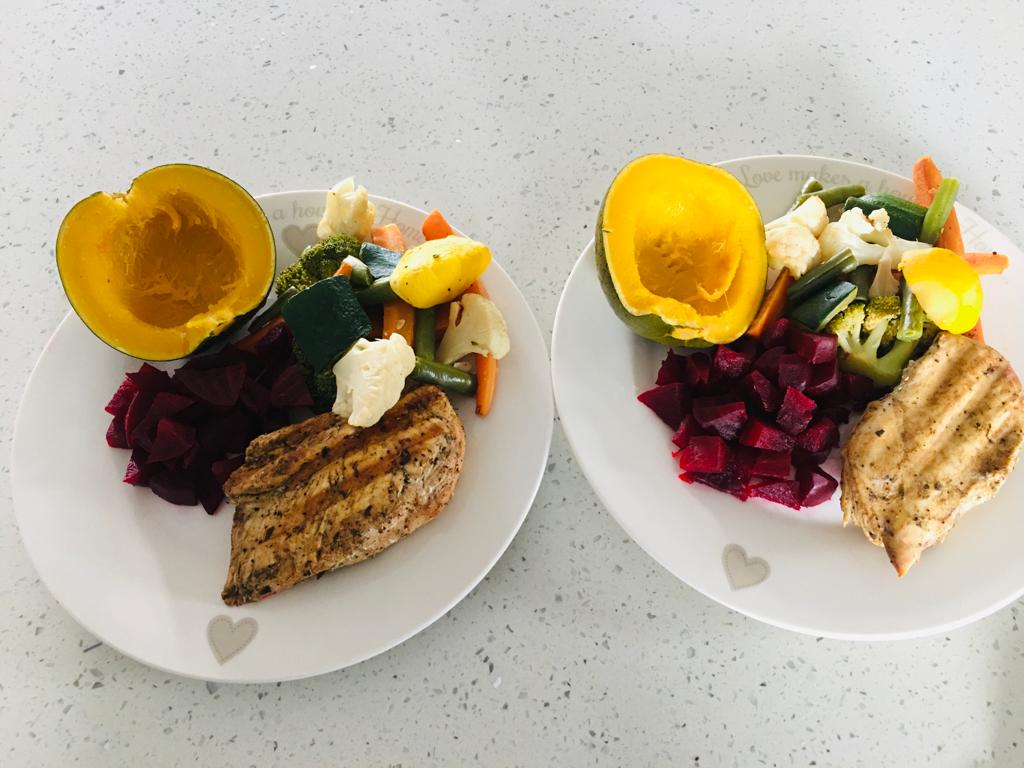

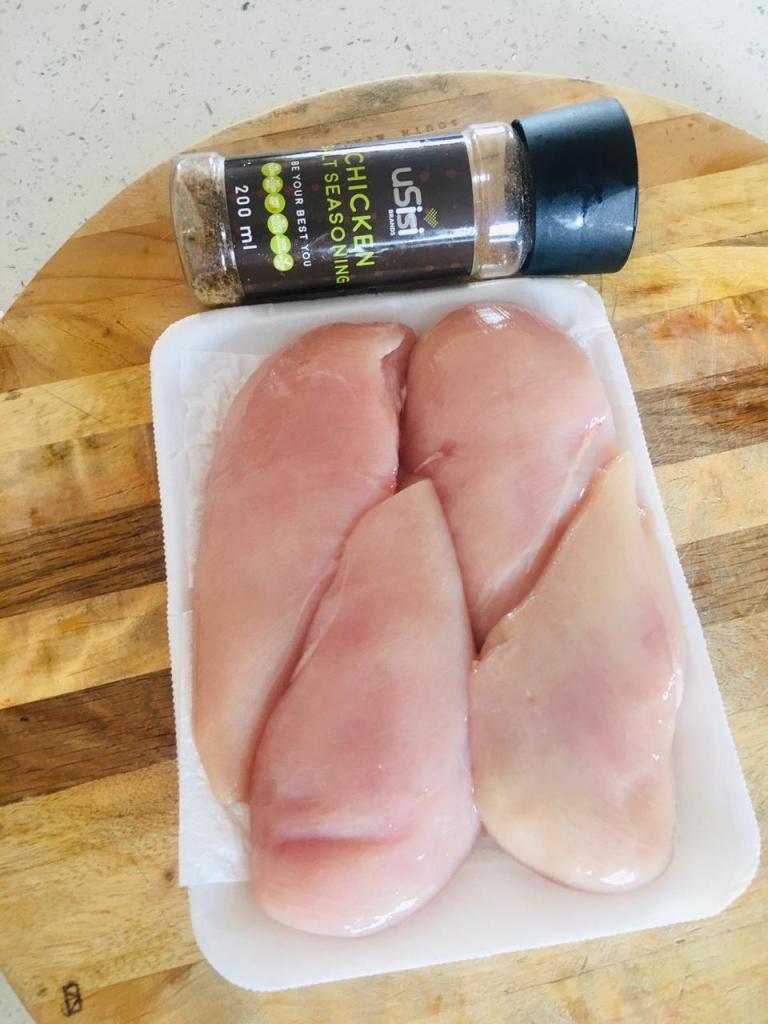
We wish you all the best with this week’s task. Until next week, stay blessed.
Kat & Tshepi


3 responses to “WEEK 3 – 2024 Weight Loss Challenge”
[…] system to lose weight, we triggered awareness of good and bad foods on your plate, we also provided tips for creating healthy meals, and finally we introduced you to MyFitnessPal, a tool to help you eat […]
LikeLike
[…] WEEK 3 – 2024 Weight Loss Challenge […]
LikeLike
[…] This week we would like to give a free 1 day meal plan that you can follow or build from it or customize your own meal plan. We are firm proponents of autonomy, we believe anyone should be free to create their own healthy diet plan, a diet that includes the foods they like and enjoy, so we try to avoid prescribing meal plans because doing this, like many diets do, is taking away a certain level of ones autonomy. We are all different and exists within different contexts, therefore our diets should and will differ, instead of having prescribed diets we should be empowered to create our own diet plans. This we can do by being guided by what is generally considered healthy , science, common sense and experience can guide us well here. One general good guide is by forming a balanced plate when creating your meal plan, we previously wrote about this concept on this blog (Forming a balanced meal). […]
LikeLike